Loan Fees and Charges Explained: What Borrowers Pay
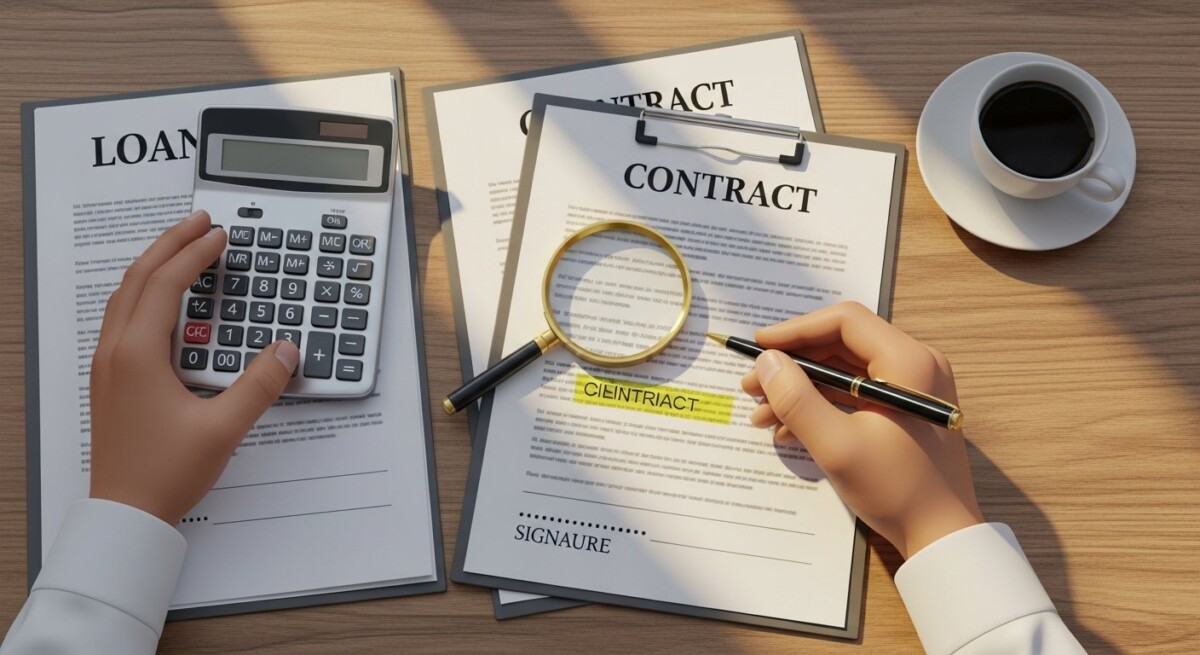

When you apply for a loan, the interest rate often gets all the attention. Yet the true cost of borrowing goes far beyond the annual percentage rate (APR) you see in bold print. Fees and charges can add hundreds or even thousands of dollars to your total repayment, and many borrowers only discover them when the final paperwork arrives. Understanding these costs before you sign is not just smart, it is essential for your financial health.
This guide breaks down the most common loan fees, explains how they affect your bottom line, and shows you how to compare offers like a seasoned borrower. By the end, you will know exactly what to look for, what to question, and how to avoid unnecessary charges.
The Most Common Loan Fees You Will Encounter
Lenders charge fees for different reasons: to cover administrative work, to mitigate risk, or to penalize certain behaviors. While the names may vary, the following fees appear across most lending products, from personal loans to auto loans to mortgages.
Origination Fees
An origination fee is charged by the lender for processing a new loan application. It covers the cost of underwriting, verifying your income, and preparing the loan documents. This fee is typically calculated as a percentage of the loan amount, usually between 1% and 8% depending on your credit score and the lender’s policies. For example, a 3% origination fee on a $10,000 loan means you pay $300 upfront, or that amount is deducted from the funds you receive.
Some lenders advertise no origination fees, but they may compensate by charging a higher interest rate. Always compare the APR, which includes both the interest rate and certain fees, to see the true cost.
Application Fees
An application fee is a flat charge to process your loan request. It is different from an origination fee because it is often non-refundable and may be charged even if you are denied. While many online lenders have eliminated application fees, some traditional banks and credit unions still charge them, ranging from $25 to $100.
If a lender demands an application fee before you have received a loan offer, treat it as a red flag. Legitimate lenders typically deduct fees from the loan proceeds or include them in the APR, rather than asking you to pay out of pocket before approval.
Prepayment Penalties
A prepayment penalty is a fee you pay if you repay your loan early. Lenders use this fee to recover the interest they would have earned if you had kept the loan for the full term. Prepayment penalties are more common in auto loans and mortgages, but they can appear in personal loans as well.
The penalty can be a flat fee or a percentage of the remaining balance. For example, a lender might charge 2% of the outstanding principal if you pay off the loan within the first two years. Before you sign, ask whether the loan has a prepayment penalty and how it is calculated. If you plan to pay off your loan ahead of schedule, a no-penalty loan is often worth the higher interest rate.
Late Payment and Default Fees
Missing a payment triggers more than just a ding on your credit report. Most lenders impose a late payment fee, typically $25 to $40 or a percentage of the payment amount, whichever is greater. If you continue to miss payments, the lender may accelerate the loan, requiring the full balance to be paid immediately, and you may also incur collection costs or attorney fees.
Defaulting on a loan has severe consequences: your credit score drops significantly, you may face wage garnishment, and the lender can seize collateral if the loan is secured. To avoid these fees, set up automatic payments or payment reminders. If you anticipate a late payment, contact your lender as soon as possible to discuss options like a grace period or a payment extension.
Returned Payment Fees
If you write a check that bounces or authorize an electronic payment that fails due to insufficient funds, the lender will charge a returned payment fee. This fee is usually around $30 to $50, and it is on top of any fees your bank charges for the non-sufficient funds transaction. To avoid this, always ensure your account has enough money before a payment is scheduled, and consider linking a backup funding source.
Fees That Hide in the Fine Print
Some fees are less obvious because they are not part of the quoted APR. These can include document preparation fees, notary fees, title search fees, and appraisal fees. In a mortgage, you might also see a loan origination fee, discount points, and a mortgage insurance premium. For personal loans, watch out for these less common charges:
- Document preparation fee: a flat charge for preparing the loan paperwork, often $50 to $200.
- Notary fee: a small fee, usually $10 to $20, for notarizing the loan documents.
- Title search and insurance: common in auto loans and mortgages, these fees verify the collateral’s ownership and protect the lender.
- Third-party verification fee: charged to verify your employment, income, or identity.
These fees are not always negotiable, but you can ask the lender to waive them or bundle them into the loan amount. Some lenders advertise “no hidden fees,” but it is your responsibility to read the loan estimate carefully. If a fee is not listed in the initial disclosure, ask for a written explanation before proceeding.
How to Compare Loan Offers Beyond the Interest Rate
When you receive multiple loan offers, the APR is the most reliable way to compare costs because it includes the interest rate and most fees. However, not all fees are included in the APR, such as late payment penalties and prepayment fees. To make an apples-to-apples comparison, ask each lender for a complete fee schedule and use a loan calculator to estimate the total cost over the life of the loan.
Here is a step-by-step process to evaluate a loan offer:
- Identify all upfront fees: origination, application, underwriting, and documentation.
- Calculate the total fee amount and decide if you can pay it upfront or if it will be financed.
- Check for ongoing fees, such as monthly maintenance or payment processing fees.
- Review the late payment and prepayment policies.
- Compare the APR, but also compute the total repayment amount (principal plus interest plus all fees).
By doing this, you might find that a loan with a slightly higher interest rate but no origination fee is cheaper than a loan with a lower rate and high fees. The total cost is what matters, not the headline rate.
The Role of Lender Fees vs. Third-Party Fees
It helps to distinguish between fees charged by the lender and fees charged by third parties. Lender fees are for services the lender performs, such as underwriting and processing. Third-party fees are for services provided by other entities, such as appraisals, credit reports, title searches, and notarization. In a mortgage, third-party fees can include home inspection, survey, and recording fees.
Lenders sometimes mark up third-party fees, meaning they add a margin to the cost of the service. For example, a credit report might cost the lender $20, but they charge you $50. While this is legal, you can negotiate or ask for an itemized list of third-party fees. For personal loans, third-party fees are rare, but you should still ask if any apply.
When a lender cannot clearly break down their fees into lender and third-party categories, that is a warning sign. Transparency is a hallmark of a trustworthy lender.
How to Avoid Unnecessary Loan Charges
The best way to avoid loan fees is to shop around and ask the right questions. Before you submit an application, call or chat with the lender and ask for a complete fee schedule. Inquire about these specifics:
- Is there an origination fee? If so, what percentage?
- Are there application, processing, or documentation fees?
- Is there a penalty for paying off the loan early?
- What is the late payment fee and after how many days is it applied?
- Are there any monthly maintenance or servicing fees?
If a lender is vague or evasive, move on to another option. Online lenders, particularly those that operate through comparison platforms like FreeQuotes.Loans, often have more transparent pricing because they compete for your business. You can also improve your credit score to qualify for lower fees, as lenders reserve the best terms for borrowers with strong credit. Additionally, consider taking a smaller loan amount if the origination fee is a percentage; a lower principal means a lower fee.
Zero-Fee Loans: Are They Really Free?
Some lenders advertise “zero-fee” loans, but they rarely mean no fees at all. Instead, they might waive the origination fee but charge a higher interest rate, or they might not charge a specific fee but include the cost in the APR. Always read the fine print and calculate the total cost. A zero-fee loan with a 15% APR might be more expensive than a loan with a 1% origination fee and a 10% APR over the same term.
In our guide on loan fees and charges explained for quick financial solutions, we show how comparing the total cost, not just the fees, can save you hundreds of dollars. The same principle applies here: zero-fee is a marketing term, not a guarantee of low cost.
When Fees Are Worth Paying
Not all fees are bad. Some fees buy you flexibility or protection. For example, a loan with a modest origination fee may still be the best option if it offers a significantly lower interest rate and you plan to keep the loan for a long time. Similarly, paying discount points on a mortgage can lower your interest rate enough to save money over the life of the loan, provided you stay in the home long enough to break even.
Consider the value of a faster funding timeline. If you have an urgent expense, like a medical bill or car repair, a lender that charges a small fee for expedited processing might be worth it if it gets you the money the next business day. The key is to weigh the fee against the benefit. Use a simple break-even calculation: if a fee saves you a certain amount per month, divide the fee by the monthly savings to see how many months you need to stay in the loan to recover the cost.
How FreeQuotes.Loans Can Help You Compare Fees
Navigating loan fees and charges explained across multiple lenders can be overwhelming, especially when you are in a hurry. That is where a connection service like loan fees and charges explained for quick funding becomes invaluable. FreeQuotes.Loans lets you submit a single request form, and you receive offers from multiple third-party lenders. This allows you to compare not just the interest rates but also the fees each lender charges, all from one place.
The service is free to use, and it does not charge any fees for connecting you with lenders. You can review each offer’s terms, including origination fees, prepayment penalties, and late payment policies, before you decide. By seeing multiple offers side by side, you can spot which lenders are transparent and which are hiding costs. This transparency empowers you to choose a loan that fits your budget, not just your immediate cash needs.
Remember, FreeQuotes.Loans is not a direct lender, so the specific fees and terms are set by the lending partners. However, the platform’s educational resources, like this article, are designed to help you make an informed decision. For more insights, you can explore our blog on other borrowing topics.
Final Thoughts on Managing Loan Costs
Loan fees and charges explained is not just a topic for financial professionals; it is a practical necessity for anyone who borrows money. The difference between a good loan and a bad loan often comes down to the fees, not the interest rate. By understanding what to look for, asking the right questions, and comparing offers carefully, you can avoid unnecessary expenses and make your borrowing experience more affordable.
Before you sign any loan agreement, take the time to read every line, ask for a written explanation of any fee you do not understand, and calculate the total cost of the loan. Use comparison tools and connection services to your advantage. A little diligence now can save you a lot of money later, and it will give you the confidence that you are making a sound financial decision.


About Miles Kensington
Related Posts