
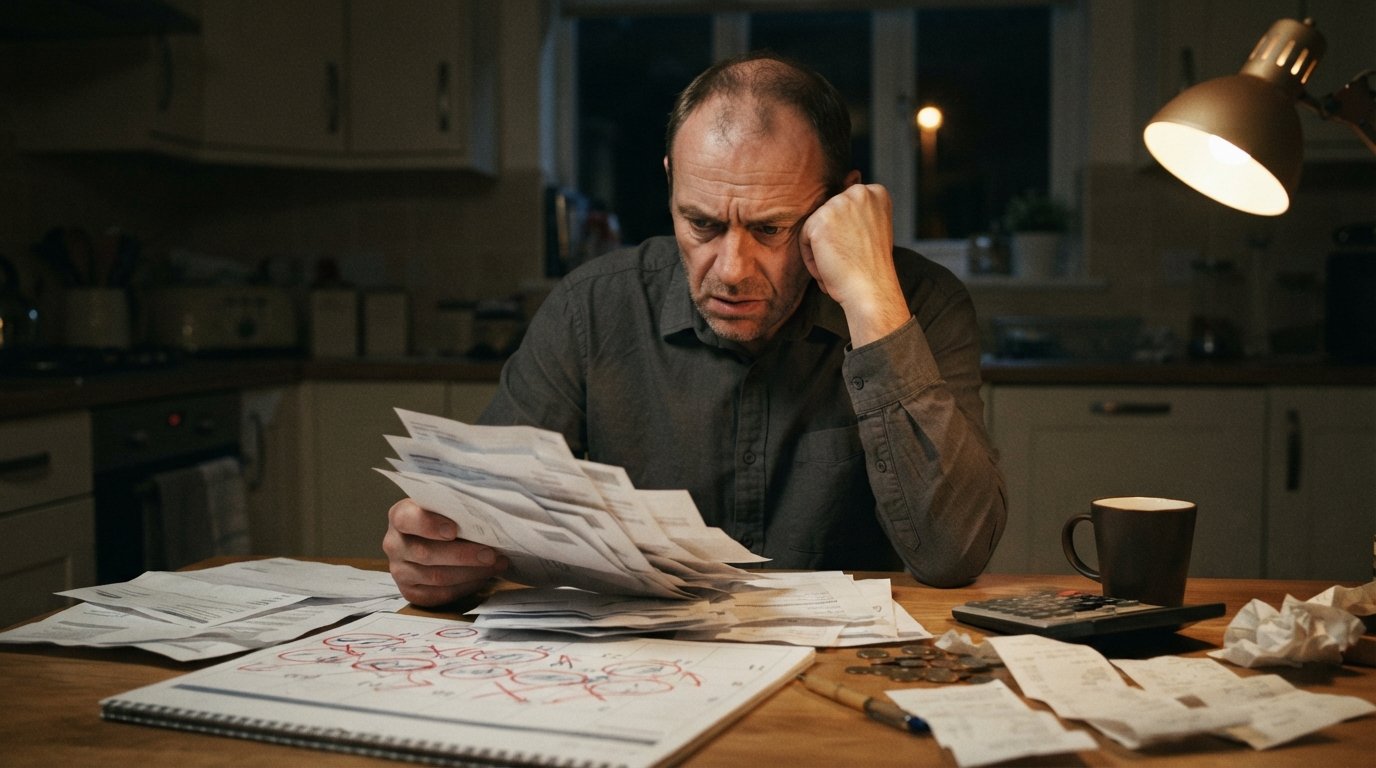
True Cost of Payday Loan Rollovers: The Debt Trap
A payday loan rollover can turn a small fee into a debt trap. See how fees stack up and how to break the cycle before it costs you hundreds.

By Marcus Owens
A payday loan can feel like a lifeline when cash is tight and payday is days away. But when that loan comes due and you cannot repay it, the rollover option can turn a short-term fix into a long-term financial nightmare. The true cost of a payday loan with rollovers is not just the original fee you see at signing; it is the compounding avalanche of fees that can quickly exceed the amount you borrowed, trapping you in a cycle that is notoriously difficult to escape. Understanding exactly how rollovers work, and what they truly cost, is the first step toward breaking free.
What Is a Payday Loan Rollover and How Does It Work?
A payday loan is a short-term, high-interest loan typically due on your next payday, usually within two to four weeks. The loan amount is often small, ranging from $100 to $1,000, and the lender charges a flat fee rather than traditional interest. For example, a $300 loan might carry a $45 fee, which translates to an annual percentage rate (APR) of nearly 400 percent if the loan were held for a full year. When the due date arrives and you cannot repay the principal and fee, the lender may offer a rollover, also called a renewal or extension. Instead of paying off the loan, you pay another fee to extend the due date, often by another two weeks.
The rollover feels like a temporary reprieve, but it is a costly one. The principal remains unchanged, and the new fee is added to your debt. In many states, rollovers are regulated or capped, but in others they are permitted with few restrictions. The Consumer Financial Protection Bureau (CFPB) has noted that rollovers are a key driver of the payday loan debt trap, because borrowers who roll over a loan are far more likely to default or take out additional loans to cover the fees.
To illustrate, imagine you take out a $300 payday loan with a $45 fee. When the loan comes due, you cannot afford the $345, so you pay another $45 to roll it over. You have now paid $90 in fees and still owe $300. If you roll over the loan four times, you will have paid $180 in fees, which is 60 percent of the original principal, and you still owe the full $300. This is the essence of the rollover trap: you are paying for the privilege of delaying repayment, but your debt does not shrink.
The True Cost: How Fees Accumulate Over Multiple Rollovers
The true cost of a payday loan with rollovers becomes glaringly obvious when you map out the fees over time. Each rollover adds another fee, and those fees are typically charged as a percentage of the original loan amount, not the remaining balance. This means that even if you pay down a portion of the principal, the fee may stay the same or be recalculated on the original amount. For a $500 loan with a $75 fee (15 percent), rolling over the loan six times would cost you $450 in fees alone, nearly doubling the amount you borrowed. And you would still owe the original $500.
Let us break down a realistic scenario. Suppose you borrow $400 with a $60 fee, due in 14 days. Your paycheck arrives, but after rent and groceries, you are short. You roll over the loan, paying another $60. Two weeks later, the same thing happens. After five rollovers, you have paid $300 in fees, which is 75 percent of the principal. If you had instead taken out a personal loan with a 10 percent APR and repaid it over six months, the total interest would be far less, and your debt would actually decrease with each payment.
The following list shows how fees stack up for a $300 payday loan with a $45 fee per rollover:
- 1 rollover: $90 in total fees, still owe $300
- 3 rollovers: $180 in total fees, still owe $300
- 6 rollovers: $315 in total fees, still owe $300
- 10 rollovers: $495 in total fees, still owe $300
As you can see, the fees quickly surpass the original principal. In the 10-rollover scenario, you have paid $495 just to keep the loan afloat, and you still owe $300. That is the true cost of rollovers: a never-ending cycle of fees that leaves you worse off than when you started. Many borrowers in this situation end up taking out new loans to cover the fees, which only compounds the problem.
Calculating the Effective APR with Rollovers
The annual percentage rate (APR) is the standard measure of the cost of a loan, expressed as a yearly rate. For a typical payday loan, the APR is already astronomical. A $300 loan with a $45 fee for a 14-day term has an APR of about 391 percent. But when you roll over the loan, the effective APR climbs even higher, because you are paying multiple fees for the same principal over an extended period.
To calculate the effective APR with rollovers, you need to consider the total fees paid and the total time you hold the loan. For example, if you roll over a $300 loan with a $45 fee three times, you have paid $180 in fees over 56 days (14 days per term). The effective APR is calculated as follows: (total fees / principal) x (365 / days) x 100. In this case, ($180 / $300) x (365 / 56) x 100 = 391 percent. Interestingly, the APR remains the same as the single-term APR because the fee is proportional to the principal and the time. However, the total dollar cost is much higher because you are paying that fee multiple times.
But the real damage occurs when you cannot repay the principal and continue to roll over. The effective APR does not capture the fact that you are no closer to repaying the debt. In fact, if you roll over the loan for a full year, you would pay $45 every two weeks, totaling $1,170 in fees on a $300 loan. That is an effective APR of 391 percent, but the dollar cost is nearly four times the principal. This is why consumer advocates warn that payday loans with rollovers are designed to trap borrowers in a cycle of debt.
It is also worth noting that some lenders charge additional fees for rollovers, such as processing fees or late fees, which can push the effective APR even higher. Always read the fine print and ask for the total cost of the loan, including all fees, before you sign.
Alternatives to Rollovers: Payment Plans and Installment Loans
If you find yourself unable to repay a payday loan and facing a rollover, know that you have options. The first step is to contact your lender and ask about a repayment plan. Many lenders are willing to work with borrowers who are proactive and honest about their financial situation. A repayment plan allows you to pay off the loan in smaller installments over a longer period, often without additional fees. Some states require lenders to offer extended payment plans to borrowers who have rolled over a loan a certain number of times.
Another alternative is to consider an installment loan, which is repaid in fixed monthly payments over a set term, typically six to twelve months. Installment loans usually have lower APRs than payday loans and provide a clear path to becoming debt-free. If you have less-than-perfect credit, you may still qualify for an installment loan, especially if you have a steady income. When comparing offers, pay attention to the APR, fees, and repayment terms. In our guide on payday loan vs personal loan quotes, we explain how to compare these options side by side.
For those who need to compare multiple offers quickly, FreeQuotes.Loans is a connection service that can match you with lenders offering payday loans, personal loans, and installment loans. Submitting a single request form takes just minutes and could connect you with multiple loan quotes from their network of third-party lenders. The service is free to use, and funds may be available as soon as the next business day. However, remember that FreeQuotes.Loans is not a direct lender, and all loan terms are set by the lenders. You can learn more about their process at 4Payday.
If you are struggling with debt, you might also consider credit counseling or a debt management plan. Nonprofit credit counseling agencies can help you negotiate with creditors, create a budget, and develop a plan to pay off your debts. These services are often low-cost or free, and they can provide the guidance you need to break the cycle of rollovers.
How to Break the Cycle of Debt
Breaking the payday loan rollover cycle requires a combination of immediate action and long-term financial habits. The first step is to stop taking out new loans to pay off old ones. This is easier said than done, but it is essential. If you are caught in a rollover loop, consider the following steps:
- Assess your situation: List all your debts, including payday loans, and calculate the total amount you owe. Include the fees and interest. This will give you a clear picture of the hole you are in.
- Contact your lenders: Explain your situation and ask for a repayment plan. Be honest and persistent. Some lenders may agree to waive fees or reduce the principal if you can demonstrate financial hardship.
- Explore alternatives: Look into installment loans, personal loans, or credit counseling. Compare offers from multiple lenders to find the lowest APR and most manageable terms.
- Create a budget: Track your income and expenses to identify areas where you can cut back. Even small savings can add up and help you build an emergency fund to avoid future payday loans.
- Seek support: Nonprofit credit counselors, community organizations, and even friends and family can provide support and accountability as you work to get out of debt.
Long-term, the best defense against payday loan rollovers is to build a financial safety net. Aim to save at least $500 to $1,000 in an emergency fund, so that unexpected expenses do not force you to rely on high-cost loans. Additionally, work on improving your credit score by paying bills on time and reducing your debt-to-income ratio. A better credit score can qualify you for lower-interest loans and credit cards, giving you more affordable options when you need cash.
Finally, be aware of the warning signs of a debt trap. If you find yourself rolling over a loan more than once, or taking out new loans to pay off old ones, you are in dangerous territory. Seek help immediately. The true cost of a payday loan with rollovers is not just the money you pay in fees; it is the stress, the damaged credit, and the lost opportunities that come with being trapped in a cycle of debt.
By understanding the mechanics of rollovers and exploring alternatives, you can make informed decisions and avoid the pitfalls of payday loans. Remember, a payday loan is a short-term solution, not a long-term fix. If you need help finding a loan that fits your needs, consider using a comparison service like FreeQuotes.Loans to explore your options and connect with lenders who may offer more affordable terms.